On this page
Hi-vis clothing has one job: to make sure people are seen early enough for drivers and plant operators to react. In the UK the performance of professional high-visibility clothing is set by BS EN ISO 20471, which grades garments into Class 1, Class 2 and Class 3. Hi-vis classes are not interchangeable, and picking the wrong class is one of the most common PPE mistakes on site. A vest that is fine in a warehouse yard can fall well short on a live carriageway. This guide explains what each class means, how combinations work, how to read the label, and which jobs normally call for which level.
What EN ISO 20471 actually measures
EN ISO 20471 sets minimum requirements for two kinds of material:
- Background (fluorescent) material: the bright yellow, orange-red or red fabric that stands out in daylight and at dusk.
- Retroreflective material: the silver tape that bounces light from headlights back towards the driver in the dark.
The standard also covers colour, how well the colour holds up after washing and light exposure, how the tape performs after cleaning, and the design of the garment. Tape has to circle the torso, sleeves need bands where they count towards the class, and so on. A garment’s class depends mainly on the minimum visible area of each material.
Minimum areas by class
| Class | Minimum background material | Minimum retroreflective material | Typical garments |
|---|---|---|---|
| Class 3 | 0.80 m² | 0.20 m² | Long-sleeve jackets, coveralls, jacket + trouser combinations |
| Class 2 | 0.50 m² | 0.13 m² | Vests/waistcoats, short-sleeve tops, some trousers |
| Class 1 | 0.14 m² | 0.10 m² | Trousers, shorts, bib-and-brace, harness-style items |
Class 3 is the highest level of conspicuity, not a “premium” version of Class 2. It means much more material is visible from every angle, including arms and legs, so a person’s shape is easier to recognise.
Hi-vis classes explained: Class 1, Class 2 and Class 3
Class 1: lowest visibility
Class 1 garments carry the least material. On their own they are only suitable for low-risk areas with slow-moving vehicles, and even then most sites ask for more. In practice Class 1 is usually seen on hi-vis trousers and shorts, worn together with a Class 2 or Class 3 top.
Class 2: the common site minimum
Class 2 is the workhorse of yards, depots, car parks and many construction sites. It is what most hi-vis vests and waistcoats achieve. It suits work near vehicles travelling at modest speeds where people are not standing in live traffic. Many principal contractors set Class 2 as the minimum for everyone on site.
Class 3: highest visibility
Class 3 is needed where traffic is fast, visibility is poor, or the risk is high: motorway and trunk-road work, emergency response, airside and rail environments, and night working near vehicles. A sleeveless vest cannot meet Class 3 on its own, because there isn’t enough area on a vest. You need a long-sleeve top such as one of our hi-vis jackets and coats, a hi-vis coverall, or a certified combination.
Reaching Class 3 with combinations
EN ISO 20471 allows garments to be certified as an ensemble. A Class 2 jacket worn with Class 1 or Class 2 trousers may reach Class 3 overall, but only if the manufacturer has tested and certified that combination. The combined class should be stated in the user information supplied with the garments. You cannot add up two labels yourself and assume Class 3.
Points to check:
- The combination is named in the manufacturer’s instructions or declaration of conformity.
- The garments are worn together and fastened. An open jacket loses visible area.
- Layers worn over the top, such as a non-hi-vis fleece or a tool vest, don’t cover the hi-vis material.
- Harnesses and tool belts are taken into account. They can hide tape, which is one reason trousers matter on roadworks.
How to read the EN ISO 20471 label
Every certified garment carries a pictogram on its label: a stylised jacket symbol with the standard number EN ISO 20471 and the class number beside it (1, 2 or 3). Some labels also show a maximum number of washes where testing showed the material only keeps its performance for a set number of cleaning cycles. After that count, the garment should be replaced even if it looks fine.
Also look for the CE or UKCA marking, size, care symbols and a reference to the manufacturer’s user information. If the label is missing, illegible or the garment is badly faded, soiled or torn, it can no longer be relied on to deliver its class. HSE notes that hi-vis is only effective if it is kept clean and in good condition (HSE: high-visibility clothing).
National Highways, Chapter 8 and the move to orange
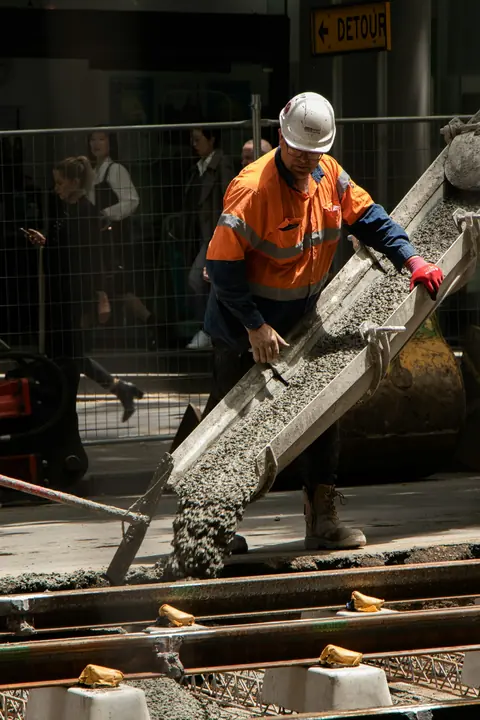
Roadworks are where hi-vis rules are most specific. The Department for Transport’s Traffic Signs Manual, Chapter 8, which National Highways and its supply chain work to, requires high-visibility clothing to EN ISO 20471 for people on or near the highway. It also sets these expectations:
- At least Class 2 garments, with Class 3 on motorways and other high-speed roads.
- Fluorescent yellow or orange-red background material.
- Jackets with full-length sleeves. Three-quarter sleeves are allowed only where a risk assessment shows full sleeves would create a greater risk.
- Class 1 hi-vis trousers where carrying equipment or other activities could hide the jacket.
Chapter 8 permits both colours, but many National Highways contractors and highways clients now specify fluorescent orange Class 3 for their workforce: a long-sleeve orange jacket worn with orange hi-vis trousers. Their reasons are to standardise across road and rail, and to stand out against the yellow of plant and signage. Requirements vary by contract, so always check the client’s PPE specification. Our orange hi-vis trousers guide covers the trouser side of the combination in more detail.
For rail, orange is mandatory trackside under the Rail Industry Standard RIS-3279-TOM. Yellow isn’t permitted there because it can be confused with signals.
Which jobs need which class?
The class should always come from your risk assessment. The Personal Protective Equipment at Work Regulations require PPE to be suitable for the risk. The table below reflects common UK practice:
| Work environment | Typical minimum | Notes |
|---|---|---|
| Motorways, dual carriageways, high-speed roads | Class 3 (jacket + trousers) | Chapter 8; orange increasingly specified by clients |
| Urban street works, lower-speed roads | Class 2–3 | Many contractors set Class 3 regardless of speed |
| Rail trackside | Class 3, orange | RIS-3279-TOM |
| Airports airside, emergency services | Class 3 | Often with FR or waterproof requirements |
| Construction sites | Class 2 (Class 3 near traffic routes) | Set by principal contractor |
| Warehouses, yards, loading bays | Class 2 | Forklift and HGV movements |
| Car parks, events, visitors | Class 2 | Vests usually sufficient |
Weather, fire risk and comfort
The class is only part of the specification. Outdoor crews in the UK usually need waterproof hi-vis or softshell hi-vis layers, and anyone exposed to flame, arc or molten splash needs flame-resistant hi-vis certified to the relevant FR standards as well as EN ISO 20471. See our guide to certified flame-resistant workwear. In colder months, a hi-vis hoodie can keep people warm without losing visibility. Our hi-vis hoodies guide explains the options.
Examples from our range include the HVP302 two-tone motorway jacket and the UC803 orange road safety jacket. Always confirm the class shown on each product’s label and specification before buying for a particular contract.
Caring for hi-vis so it keeps its class
- Follow the care label, and keep count of washes if a maximum is stated.
- Don’t add unapproved patches, badges or logos that cover tape or fluorescent areas.
- Replace garments that are faded, heavily soiled, torn, or have cracked or peeling tape.
- Store away from direct sunlight when not in use, because UV fades fluorescent dyes.
FAQs
Is a hi-vis vest Class 3?
No. A sleeveless vest doesn’t have enough background and retroreflective area to reach Class 3. Most vests are Class 2. For Class 3 you need a long-sleeve jacket, a coverall, or a certified jacket-and-trouser combination.
Can I combine a Class 2 jacket and Class 1 trousers to get Class 3?
Only if the manufacturer has tested and certified that exact combination as Class 3, and says so in its user information. You cannot combine labels yourself.
What hi-vis class is needed on motorways?
Chapter 8 of the Traffic Signs Manual requires Class 3 on motorways and high-speed roads. That normally means a long-sleeve jacket plus hi-vis trousers, in fluorescent yellow or orange-red. Many clients now specify orange.
Is orange or yellow hi-vis better?
Both are permitted under EN ISO 20471. Orange is mandatory for rail trackside work and is often specified for highways. Yellow is common elsewhere. Choose the colour that contrasts best with your working background and meets your client’s rules.
How long does hi-vis clothing last?
Hi-vis clothing doesn’t have a fixed lifespan. Replace it when it fades, gets damaged or dirty beyond cleaning, or reaches any maximum wash count shown on the label.
Does EN ISO 20471 replace EN 471?
Yes. EN 471 was withdrawn and replaced by EN ISO 20471 for high-risk high-visibility clothing. Buy garments certified to EN ISO 20471.
Summary
Match the class to the risk: Class 2 for most yards and sites, Class 3 for roads, rail and other high-risk work. Remember that vests stop at Class 2 and combinations only count when they are certified. Read the pictogram, keep garments clean, and check the client’s colour rules, especially orange on highways and rail. Browse the full hi-vis clothing range to build the right kit.
Sources: HSE high-visibility clothing factsheet; Traffic Signs Manual Chapter 8 (DfT); BS EN ISO 20471 (BSI).