On this page
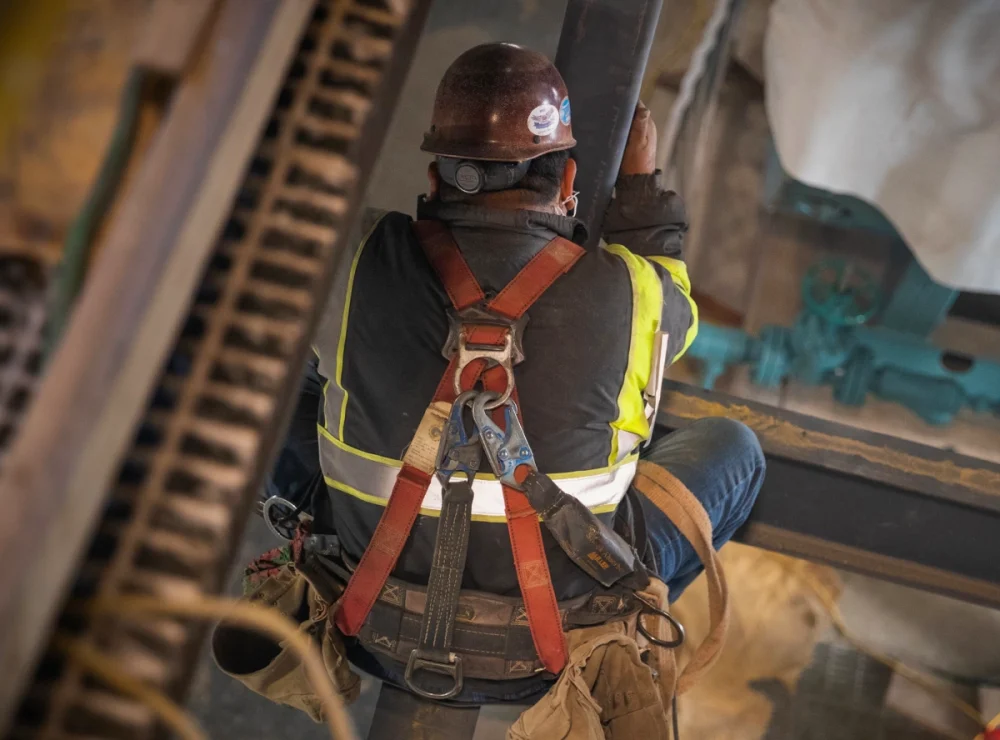
A full body harness is only as safe as its last inspection. Webbing can be cut, abraded, burned by chemicals or degraded by sunlight, and the damage is often subtle. In Great Britain, the Work at Height Regulations 2005 require personal fall protection equipment to be suitable, properly maintained and inspected. HSE guidance sets out how that should work in practice. This article explains the three levels of inspection, the standards involved, the widely used six-month interval, and when a harness must be retired. It ends with a checklist table you can copy into your own inspection records.
The legal framework
Work at Height Regulations 2005
The Work at Height Regulations 2005 (WAHR) apply to all work at height where there is a risk of a fall liable to cause injury. The key points for harness users are:
- Regulation 12 requires work equipment exposed to conditions that cause deterioration to be inspected at suitable intervals and whenever exceptional circumstances occur that might affect its safety. Inspections must be done by a competent person and recorded.
- Schedule 5 sets requirements for personal fall protection systems. They must be suitable and of sufficient strength, fit the user, be correctly attached to a reliable anchor, and be used only by people who have been trained.
- Personal fall protection is lower in the hierarchy than collective measures such as guardrails and nets. It should be used when the risk can’t be eliminated or prevented by other means.
Product standards: EN 361, EN 355 and related standards
| Standard | Covers |
|---|---|
| BS EN 361 | Full body harnesses |
| BS EN 355 | Energy absorbers (shock-absorbing lanyards) |
| BS EN 354 | Lanyards |
| BS EN 362 | Connectors (karabiners, scaffold hooks) |
| BS EN 360 | Retractable type fall arresters (self-retracting lifelines) |
| BS EN 363 | Personal fall protection systems |
| BS EN 365 | General requirements for instructions, maintenance, periodic examination and marking |
| BS 8437 | Code of practice for selection, use and maintenance of personal fall protection systems |
A fall-arrest system is usually an EN 361 harness connected through an EN 355 energy-absorbing lanyard, or an EN 360 retractable, to a suitable anchor with EN 362 connectors. Every component needs inspecting, not just the harness.
The three types of inspection
HSE’s leaflet INDG367: Inspecting fall arrest equipment made from webbing or rope describes three levels.
1. Pre-use checks
The user carries out a pre-use check every time before putting the harness on. It is a visual and tactile check. HSE suggests passing the webbing slowly through the hands, bending it to reveal damage, and looking for cuts as small as about 1 mm. Pre-use checks aren’t usually recorded, but users must be trained to do them and to report defects.
2. Detailed inspections
A competent person carries out a formal, recorded detailed inspection at regular intervals. HSE guidance recommends at least every six months, and every three months where equipment is used in arduous conditions such as demolition, steel erection, scaffolding, or work on masts and towers. BS EN 365 sets a 12-month maximum. Industry guidance, including BS 8437 and the Work at Height Safety Association, has adopted the stricter six-month interval as UK good practice. A detailed inspection is also expected before first use and after any fall arrest or other incident.
3. Interim inspections
Interim inspections take place between detailed inspections where the risk assessment shows equipment could deteriorate quickly. Examples include harsh environments, chemical exposure, hot work or heavy daily use. They are carried out by a competent person and recorded.
Summary of inspection levels
| Inspection | Who | When | Recorded? |
|---|---|---|---|
| Pre-use check | Trained user | Before every use | Not normally |
| Detailed inspection | Competent person | At least every 6 months (3 months for arduous use); before first use; after a fall | Yes |
| Interim inspection | Competent person | Between detailed inspections where risk is higher | Yes |
Harness inspection checklist
Copy this table into your own records. Mark each item Pass or Fail, add notes, and quarantine the harness if any item fails. Always follow the manufacturer’s instructions, which take priority for specific products.
| Area | What to check | Pass / Fail | Notes |
|---|---|---|---|
| Label and markings | Label present and legible: EN 361, manufacturer, model, serial/batch number, date of manufacture | ☐ / ☐ | |
| Records | Inspection record up to date; within detailed inspection interval; within manufacturer’s lifespan | ☐ / ☐ | |
| Webbing | No cuts, nicks, fraying, abrasion, broken fibres, burns, heat glazing, hardening or discolouration | ☐ / ☐ | |
| Contamination | No paint, chemicals, oils, solvents, mortar or unknown substances | ☐ / ☐ | |
| Stitching | No loose, cut, pulled or worn stitching in load-bearing seams | ☐ / ☐ | |
| Fall indicators | Fall arrest indicator stitching or tabs intact, not deployed | ☐ / ☐ | |
| Attachment points | Dorsal/sternal D-rings and loops undamaged, not distorted, cracked or corroded | ☐ / ☐ | |
| Buckles and adjusters | Operate correctly, lock securely, no sharp edges, cracks, distortion or corrosion | ☐ / ☐ | |
| Plastic parts | Keepers and loops present and not cracked or brittle | ☐ / ☐ | |
| Lanyard / energy absorber | EN 355 pack intact and not deployed; lanyard webbing or rope undamaged | ☐ / ☐ | |
| Connectors | EN 362 gates close and lock automatically; no distortion, cracks or corrosion | ☐ / ☐ | |
| Fit | Harness fits the user and adjusts correctly over the clothing worn | ☐ / ☐ |
When to retire a harness
Withdraw a harness from service immediately, quarantine it, and either destroy it or refer it to the manufacturer if any of the following applies:
- It has arrested a fall, or the fall indicator has deployed.
- It fails any point of a pre-use check or inspection, or there is any doubt about its condition.
- The label is missing or illegible, so it can’t be identified or traced.
- It has been exposed to chemicals, heat, flame or weld spatter.
- It has reached the maximum lifespan stated by the manufacturer, or its inspection history is unknown.
- It has been modified or repaired by anyone other than the manufacturer.
Mark retired equipment clearly, or cut it, so that it can’t find its way back into use.
Storage, care and rescue
- Store harnesses clean and dry, out of direct sunlight, away from heat and chemicals, hung up or loosely packed.
- Clean only as the manufacturer recommends, usually mild soap and water followed by natural drying.
- Have a rescue plan. WAHR requires emergency procedures, and suspension in a harness can quickly become dangerous. Suspension trauma straps such as the FP98 suspension trauma straps can help while a rescue is underway.
Examples from our range
Browse our safety harnesses, lanyards, harness accessories and the full fall protection range. Examples include the Portwest Ultra 3 point harness (FP73), the FP74 single lanyard with shock absorber and the FP64 scaffolding kit. For overall PPE planning, see the difference between workwear and PPE.
FAQs
How often should a safety harness be inspected?
Before every use by the wearer, and with a recorded detailed inspection by a competent person at least every six months. HSE recommends every three months for arduous work such as demolition, steel erection or scaffolding.
Who can carry out a detailed harness inspection?
A competent person: someone with the training, knowledge and experience to inspect the specific equipment, usually backed by manufacturer or industry training. They must be able to act independently and stop defective equipment being used.
Do pre-use checks need to be recorded?
Not usually, although some employers choose to record them. Detailed and interim inspections must be recorded under the Work at Height Regulations 2005.
Can a harness be used again after a fall?
No. Any harness or energy absorber that has arrested a fall should be withdrawn from use straight away and replaced, unless the manufacturer specifically says otherwise.
What is the difference between EN 361 and EN 355?
EN 361 covers full body harnesses. EN 355 covers energy absorbers, the shock-absorbing element of a fall-arrest lanyard that limits the force on the body during a fall.
How long does a harness last?
Lifespan is set by the manufacturer and depends on use and storage. A harness must be retired earlier if it fails inspection, has arrested a fall, or its history is unknown.
Summary
Check the harness before every use, have a competent person inspect it in detail at least every six months (more often for arduous work), keep records, and retire it if it has arrested a fall or there is any doubt about its condition. For brands and suppliers, see our guide to choosing a safety supply company.
Sources: Work at Height Regulations 2005; HSE INDG367; HSE work at height; Work at Height Safety Association.