On this page
If you work on the railway, on highways or in any high-risk outdoor environment, orange hi vis trousers aren’t just a uniform choice — they’re often a site or contract requirement. This guide covers what you need to know before you buy, from the standards they must meet to the styles best suited to your job.
Why Orange Hi Vis Trousers? Understanding the Colour Code
Yellow hi vis is the default in many industries, but orange is often chosen where yellow would blend into the background, and it is mandatory for trackside rail work. On and around the UK rail network, orange is the only accepted colour: if you work lineside, yellow trousers will not pass.
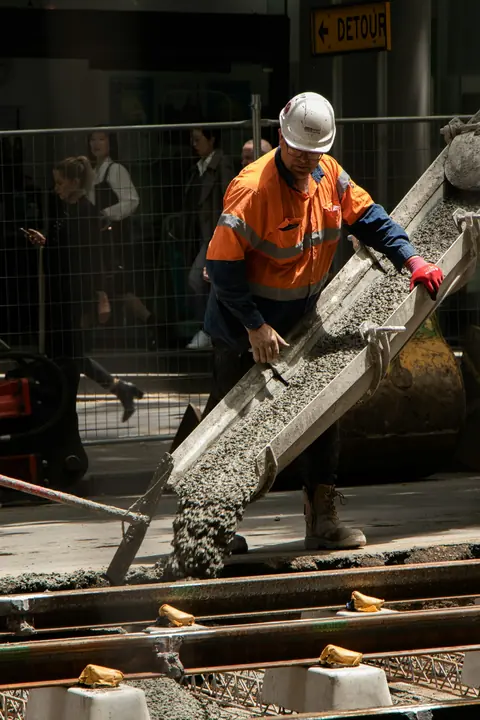
On roads, Chapter 8 of the Traffic Signs Manual allows either yellow or orange-red high visibility clothing. Many highways clients and contractors now specify orange on their schemes, so it is common on road works, but it is a contract or site requirement rather than a legal one. Other construction and utilities sites often accept yellow, so always check your contract or site rules.
The Standards You Need to Know
EN ISO 20471
The standard for high visibility clothing used in the UK and Europe. It sets the minimum areas of fluorescent background material and retroreflective tape for three classes:
- Class 1: the lowest coverage, for lower-risk areas.
- Class 2: the mid level. This is the highest class that hi vis trousers can achieve on their own.
- Class 3: the highest coverage, required for the most hazardous conditions such as high-speed roads. You reach it with a coverall, or by wearing trousers together with a hi vis jacket or long-sleeved top so the combined outfit meets the Class 3 areas.
Check which class your employer’s risk assessment or site policy specifies before purchasing.
RIS-3279-TOM (Rail Industry Standard)
The GB rail standard for high visibility clothing worn on or near the line, which replaced GO/RT3279. Rail hi vis must be orange and meet RIS-3279-TOM. EN ISO 20471 alone is not sufficient. A reputable supplier will state clearly whether a garment meets this standard.
Choosing the Right Style for Your Job
Combat & Cargo Trousers
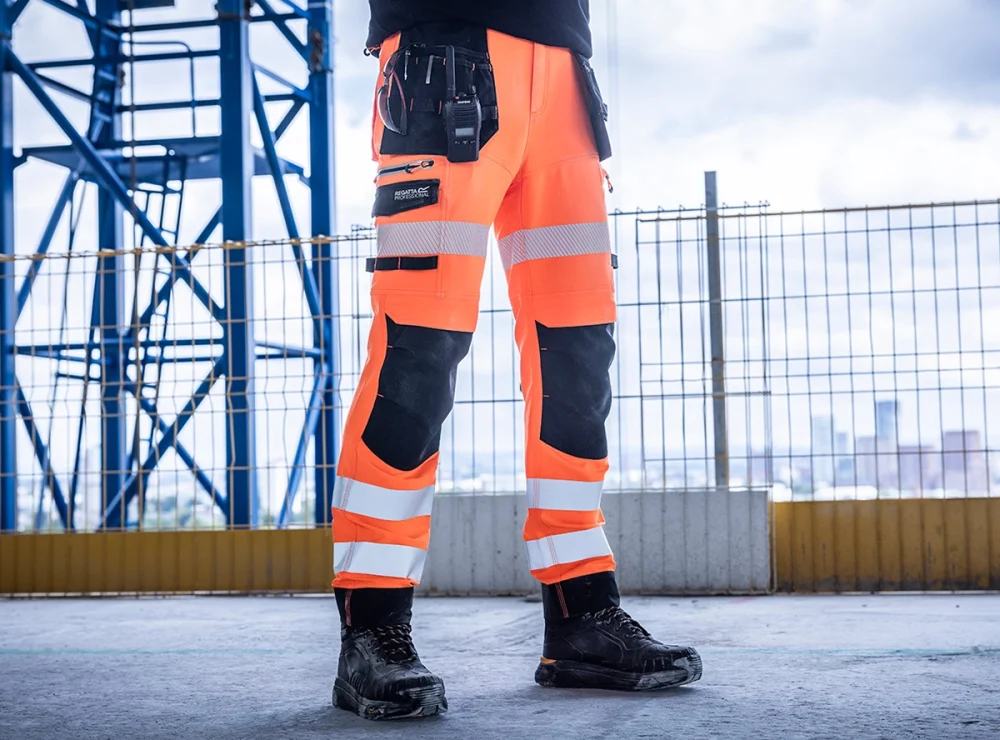
The most popular choice for general site use. They have multiple tool and storage pockets, knee pad pockets and reinforced high-wear areas, so they’re the most practical option if you move around a lot and carry equipment.
Waterproof Over-Trousers
These go over your normal trousers on wet days. Look for an EN 343 rating for protection against rain, and for taped or welded seams to keep water out in unpredictable British weather.
Salopettes (Bib & Brace)
The bib covers more of the torso, which helps in colder months and on dirty sites. It also adds hi vis area, which can make Class 3 easier to reach with a top.
Flame-Retardant (FR) Trousers
Essential where there is a risk of heat, flame or electric arc, for example in utilities, petrochemicals or electrical work. FR hi vis trousers carry additional standards such as EN ISO 11612 (heat and flame) and IEC 61482-2 (arc flash). Never substitute standard hi vis trousers for them.
Key Features to Look For
- Triple-stitched seams for heavy use
- Knee pad pockets (top-loading pockets are easier to use) and compatible EN 14404 knee pads
- Multiple cargo pockets for tools, phones and equipment
- Adjustable waistband for a secure fit
- Reinforced seat and knees
- Retroreflective bands positioned for visibility at night and in low light
Getting the Right Fit
Hi vis trousers should be snug enough not to catch on equipment, with enough freedom to crouch, climb and kneel. Many brands offer short, regular and tall leg lengths. If you’re between waist sizes, size up, especially in stiffer polycotton. On rail and road sites, fit is a safety issue: loose clothing that snags or restricts movement is a hazard in itself.
Shop Orange Hi Vis Trousers at Safety Workwear
We stock orange hi vis trousers for every trade, including RIS-3279-TOM rail trousers, waterproof over-trousers and heavy-duty combat trousers. Browse hi vis trousers and shorts, add a hi vis vest or waistcoat to complete a Class 3 outfit, and pick up knee pad inserts to match.
Frequently Asked Questions
Do I need orange hi vis trousers for road work?
Not by law. Chapter 8 allows yellow or orange-red hi vis on the highway, but many highways clients and contractors specify orange, so it is often required by the contract. Always check the colour and class in your contract or site PPE rules.
Are orange hi vis trousers mandatory for rail workers?
Yes. Anyone working on or near the operational railway in Great Britain must wear orange high visibility clothing that meets RIS-3279-TOM. Yellow is not permitted.
What’s the difference between Class 1, 2 and 3 hi vis trousers?
The class reflects the minimum area of fluorescent and retroreflective material. Trousers on their own can reach Class 1 or Class 2. Class 3 is achieved with a coverall, or by combining trousers with a hi vis jacket or top.
Can I wash orange hi vis trousers without losing visibility?
Yes, but follow the care label. The label shows the maximum number of wash cycles the garment was tested to. Replace trousers once they fade, are heavily soiled, are damaged or have passed that limit, because they may no longer meet the standard.
Stay safe, stay seen: shop the full hi vis range.