On this page
Knee Pads for Work: Why They’re Essential and How to Choose the Right Pair
When your job involves kneeling, crawling or working on hard surfaces, your knees take a beating. Over time, repeated kneeling can lead to chronic pain, bursitis (“housemaid’s knee”), cartilage wear and joint damage. Good-quality knee pads for work are essential, not optional. This guide covers the risks, the standard to look for and how to select quality knee pads for your work.
Why Knee Protection Matters on the Job
When you kneel on floors, sub-floors and concrete slabs, much of your body weight rests on a small area of the kneecap. Knee pads spread that pressure, cushion impacts and guard against sharp debris, protecting the joint from both injury and long-term wear. Comfortable knees also mean fewer breaks, less fatigue and safer, more productive work.
Who Needs Knee Pads for Work?
- Floor layers, tilers and carpet fitters
- Plumbers, pipefitters and HVAC engineers
- Electricians working in crawl spaces
- Roofers and decking trades on hard surfaces
- Maintenance, facilities and construction trades
- Warehouse and outdoor operatives who regularly kneel on concrete
Understanding EN 14404
EN 14404 is the European standard for knee protectors for work in the kneeling position. It defines four types:
- Type 1: standalone pads strapped to the leg
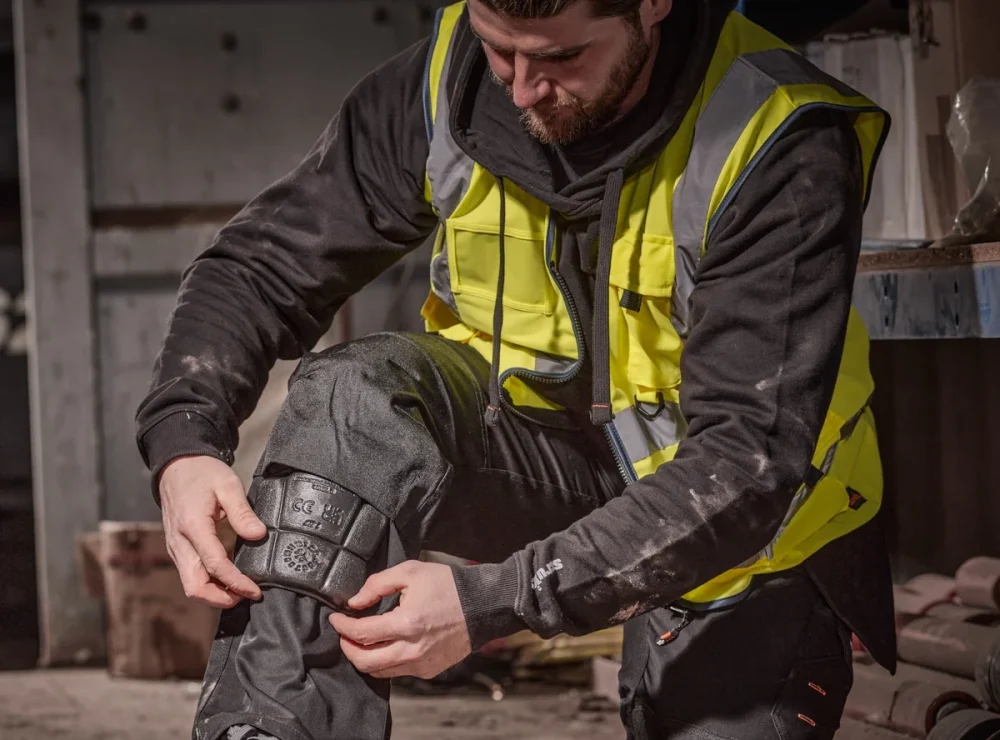
- Type 2: foam or gel inserts that fit into knee pad pockets in work trousers
- Type 3: pads not attached to the body, such as kneeling mats
- Type 4: protectors that form part of another device, such as a kneeling frame
Performance levels run from level 0 (flat floors only, no penetration resistance) to levels 1 and 2 (penetration resistance for uneven ground and sharp debris). Choose level 1 or 2 for building sites and outdoor work.
How to Select Quality Knee Pads for Work
- Shell type: hard caps for rough or debris-strewn surfaces; soft or non-marking pads for finished indoor floors.
- Padding: foam or gel to spread pressure evenly.
- Fit and adjustability: straps that stay put without cutting off circulation. For trouser inserts, check they suit your trousers’ pockets.
- Certification: EN 14404, with the right type and level for your work.
Top Knee Pads for Work
We stock knee pads and inserts for every trade, including:
- KP44 CE Knee Pad: a lightweight, flexible insert for knee pad pockets
- KP20 Lightweight Knee Pad: an everyday insert for lighter-duty kneeling
- KP10 High Density Knee Pad: high-density foam for longer kneeling
- KP30 Super Gel Knee Pad and KP65 Gel Foam Stabiliser: gel comfort for extended kneeling
- KP50 Non-Marking Knee Pad: for finished floors
- KP45 Elbow Pads, the PW84 Open Patella Knee Support and the PW86 Elbow Support Brace: supports for joints under strain
Browse the full knee pads and inserts collection, and pair inserts with work trousers with knee pad pockets.
How to Get the Most from Your Knee Pads
- Position pads directly over the kneecap. For inserts, set the pocket height if your trousers allow it.
- Adjust straps so they are secure but comfortable.
- Clean and air-dry pads after use.
- Replace pads when the foam is compressed or the shell is cracked or worn.
Conclusion
Your knees are among the most valuable and vulnerable joints you work with. The right EN 14404 knee pads mean better comfort, fewer injuries and greater long-term productivity. Protect your team with certified, durable and affordable options from Safety Workwear UK.